


Blog
5-MAPB Legal Status: What the Law Says in Different Countries
18
Aug
Aug
The legal status of 5-MAPB varies considerably between countries. In some jurisdictions, 5-MAPB is specifically controlled by name. In others, broader laws covering chemical analogs or classes of psychoactive substances may determine how the compound is treated, which is why the legal question can differ so widely from one country to another.
As a result, legal research is more complicated than simply searching a country’s controlled-substance list for the name “5-MAPB.”
5-MAPB is a synthetic benzofuran compound that has appeared in international drug-monitoring systems as a novel psychoactive substance. The World Health Organization currently lists 5-MAPB under surveillance and notes reports of misuse in several member states. (5-MAPB – Expert Committee on Drug Dependence Information Repository, 2025)
Because regulations can change and interpretations can depend on the circumstances, this article provides general educational information, not legal advice.
What Is 5-MAPB?
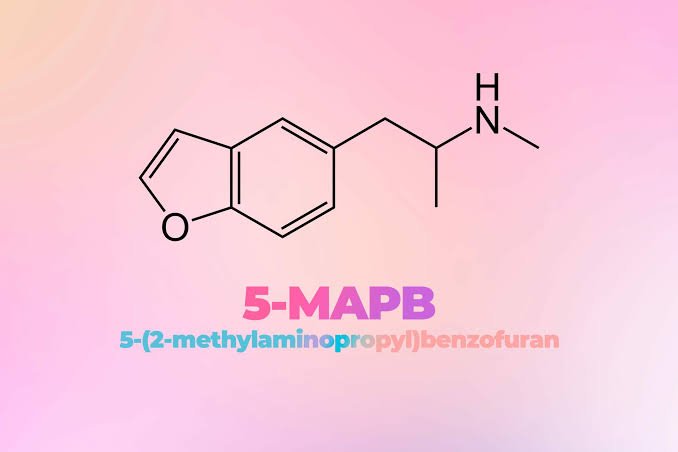
5-MAPB is the common abbreviation for 5-(N-methyl-2-aminopropyl)benzofuran. It belongs to a group of synthetic benzofuran compounds that have attracted attention in forensic science and new psychoactive substance monitoring.
The compound has been identified in seized materials and investigated by drug-monitoring organizations. The World Health Organization describes 5-MAPB as an amphetamine-type stimulant and reports effects associated with stimulant intoxication, including increased blood pressure, increased body temperature, wakefulness, and rapid or irregular heartbeat.
These pharmacological characteristics matter for legal treatment because some countries regulate substances by chemical structure, pharmacological properties, or their relationship to already controlled drugs.
Why Is 5-MAPB’s Legal Status Complicated?
No single international law governs 5-MAPB.
Each country determines how it regulates psychoactive substances. Some governments use traditional schedules that list individual compounds. Others have introduced broader definitions designed to cover groups of structurally related substances, creating different ways a compound may be treated.
This creates several possible situations.
A compound may be:
- Specifically named in a controlled-substance schedule
- Covered by a broader chemical definition
- Potentially treated as an analog of another controlled substance.
- Regulated under a new psychoactive substance law
- Subject to import or customs restrictions
- Unscheduled at the national level but restricted by another law
For this reason, the statement “5-MAPB is legal” is incomplete unless the relevant country and circumstances are clearly identified.
5-MAPB Legal Status in the United States
The United States is an important example because a substance’s absence from a schedule does not necessarily settle the legal question.
The Drug Enforcement Administration explains that a substance does not necessarily have to be specifically listed in the federal schedules to be treated as a controlled-substance analog potentially. Under the federal analog framework, certain substances intended for human consumption can fall within the definition when they have the required structural or pharmacological similarity to a Schedule I or II substance and meet other statutory requirements.
This means that a search for “5-MAPB” in the federal schedules should not be the only step in considering its legal position.
Federal scheduling and analog law
5-MAPB’s relationship to other benzofuran and amphetamine-type compounds makes analog law particularly relevant when discussing its status in the United States.
However, determining whether a particular substance qualifies as a controlled-substance analog under federal law can depend on specific statutory requirements and actual circumstances.
State laws can impose extra restrictions. A substance’s federal position therefore should not automatically be interpreted as its position in every U.S. state.
Why intended use matters
The federal analog framework expressly addresses substances intended for human consumption. This is one reason why statements about a chemical being “unscheduled” should not automatically be interpreted as permission for human use or distribution.
Legal analysis can depend on how a substance is represented, handled, marketed, and intended for use.
5-MAPB Legal Status in the United Kingdom
The United Kingdom has a much clearer position on 5-MAPB.
UK government material from the Home Office identifies 5-MAPB as a Class B drug under the Misuse of Drugs Act framework. UK Border Force identified the substance in samples and listed it among Class B substances in the government’s forensic early warning system report.
This means that 5-MAPB should not be treated as an unrestricted research chemical in the UK.
The country’s controlled-drug framework can impose restrictions on activities including possession, production, supply, and importation.
Why the UK classification matters
The UK approach illustrates the difference between historical availability and current legal status, showing why old market presence does not determine present treatment.
Some novel psychoactive substances were initially marketed as alternatives to controlled drugs before governments introduced specific restrictions. Once a substance is brought within the controlled-drug framework, its previous commercial availability does not determine its current legal position.
For anyone researching 5-MAPB legal status in the UK, current UK government legislation should take priority over older articles, vendor descriptions, or forum discussions.
5-MAPB Legal Status in France
France provides another clear example of a country using broad chemical definitions.
French legislation places controls on benzofuran derivatives and specifically identifies 5-MAPB, using its chemical name, within the relevant controlled-substance provisions. The French legal document also covers broader categories of benzofuran molecules with specified structural characteristics.
This is significant because the French approach does not rely solely on an individual substance appearing as an isolated entry; it also uses broader chemical definitions.
Why chemical definitions matter
Broad chemical definitions can capture multiple related compounds within the same legal framework.
For researchers examining the legal status of novel psychoactive substances, this is an important distinction. Searching only for a substance’s common abbreviation may not reveal the full scope of a country’s regulations.
The exact chemical name and structural definition can therefore be important when interpreting legislation.
5-MAPB Legal Status in Canada
Canada requires a more careful explanation.
The Controlled Drugs and Substances Act prohibits unauthorized possession of substances included in specified schedules and restricts trafficking and other activities involving controlled substances. The Act also defines an analog as a substance with a substantially similar chemical structure to a controlled substance.
However, determining whether 5-MAPB falls within a particular Canadian controlled-substance provision necessitates examining the current schedules and the relevant legal definitions.
The fact that a substance is not found by name in a schedule should therefore not be interpreted automatically as a declaration that it is unrestricted.
Importation is a separate consideration.
Canada’s legislation also provides regulatory authority concerning the importation, exportation, production, transportation, sale, possession, and other dealings involving controlled substances.
Consequently, anyone evaluating 5-MAPB in Canada should consider both domestic classification and import requirements where applicable.
Other Countries Can Take Different Approaches
The legal status of 5-MAPB is not limited to the jurisdictions discussed above.
International drug-monitoring organizations have documented the substance in multiple countries. The WHO currently keeps 5-MAPB on its surveillance list rather than placing it under international control through the WHO process.
That distinction is important because international surveillance is not the same as international legality.
International surveillance is not the same as international legality.
A substance being monitored by the WHO does not mean that it is legal worldwide.
The WHO explains that it places substances on its surveillance list when available evidence is insufficient to recommend international control, but further monitoring is considered appropriate.
Individual countries remain free to impose their own restrictions.
As a result, 5-MAPB can have different legal classifications in different jurisdictions, even when countries respond to the same international scientific information.
Does “Research Use Only” Change 5-MAPB Legal Status?
A label stating “for research use only” does not automatically change a substance’s legal classification.
Legal status is determined by applicable legislation, not simply by the wording printed on a package or product page.
This distinction is especially important in jurisdictions where analog laws consider factors such as intended human consumption.
A research designation may describe the intended context of a product, but it should not be treated as a legal exemption from controlled-substance laws.
Does an Unscheduled Substance Mean It Is Legal?
Not necessarily, and that is one of the most important points when researching novel psychoactive substances.
This is one of the most important points when researching novel psychoactive substances.
A substance can be absent from a specific schedule while still being affected by:
- Analogue legislation
- Generic chemical definitions
- New psychoactive substance laws
- Medicines legislation
- Customs regulations
- Import restrictions
- State or provincial laws
- Other criminal or regulatory provisions
The United States provides a clear example because federal analog legislation can apply to substances not individually named in the schedules.
Why 5-MAPB Laws Can Change
Novel psychoactive substances present a regulatory challenge because new molecules can be created by making relatively small structural changes to existing compounds.
Governments may respond by adding individual substances to schedules or by creating broader definitions which include groups of structurally related compounds.
This means a legal position reported several years ago may no longer be accurate.
The WHO’s continued surveillance of 5-MAPB also demonstrates that the international regulatory and scientific discussion remains active.
5-MAPB Legal Status at a Glance
| Jurisdiction | General regulatory picture |
| United States | Federal analog provisions may be relevant even where a substance is not specifically scheduled |
| United Kingdom | 5-MAPB is identified as a Class B substance |
| France | 5-MAPB is specifically included within controlled benzofuran provisions |
| Canada | Assessment requires consideration of the CDSA schedules and analog provisions. |
| Other countries | Status varies according to national legislation |
This table is intended as a general reference and should not be treated as a legal determination for a particular situation.
What Should You Check Before Handling 5-MAPB?
Anyone researching the legal position of 5-MAPB should consider more than the compound’s name.
The following questions can help establish the relevant legal framework:
1. Is 5-MAPB specifically scheduled?
Search the current controlled-substance legislation for both the common name and the chemical name.
2. Does the country use analog provisions?
Some jurisdictions can regulate substances that are chemically or pharmacologically related to controlled drugs.
3. Are there broader chemical definitions?
A law may cover an entire class of benzofuran or amphetamine-related compounds rather than listing every substance individually.
4. Are there import restrictions?
A substance’s domestic status does not necessarily determine whether it can legally cross a national border.
5. Do regional laws apply?
In countries with federal systems, state, provincial, or territorial rules may create additional restrictions.
Frequently Asked Questions About 5-MAPB Legal Status.
Is 5-MAPB legal in the United States?
Its legal position cannot be determined simply by whether the name appears in the federal schedules. Federal controlled-substance analog provisions may apply when the statutory requirements are met.
Is 5-MAPB legal in the UK?
No. UK government material identifies 5-MAPB as a Class B drug.
Is 5-MAPB controlled in France?
Yes. French legislation specifically identifies 5-MAPB within its controlled benzofuran provisions.
Does Canada specifically list 5-MAPB?
The current Canadian framework should be examined through the Controlled Drugs and Substances Act schedules and its definitions rather than relying solely on a name search. The Act contains provisions concerning controlled substances and structurally similar analogs.
Is 5-MAPB internationally controlled?
The WHO currently lists 5-MAPB under surveillance rather than international control. National laws can nevertheless impose their own restrictions.
Can the legal status of 5-MAPB change?
Yes. Governments can amend controlled-substance schedules, introduce new analog provisions, or change regulations affecting novel psychoactive substances.
Final Thoughts on 5-MAPB Legal Status
The 5-MAPB legal status depends heavily on jurisdiction and the precise wording of the applicable law.
The United Kingdom and France provide clear examples of national control. At the same time, the United States demonstrates why analog legislation can matter even when a substance is not individually named in a federal schedule. Canada’s framework likewise requires consideration of controlled-substance schedules and relevant legal definitions.
